
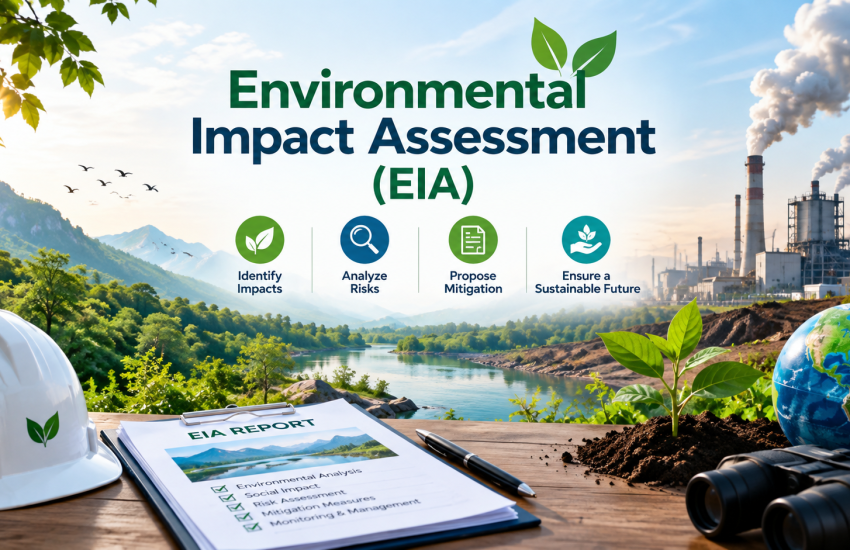
Environmental Impact Assessment (EIA): A Complete Guide
Environmental Impact Assessment (EIA) is an important process used to identify, evaluate, and manage the potential environmental effects of proposed projects before they are implemented. It helps decision-makers understand how a development project may affect air, water, soil, biodiversity, communities, and natural resources.
As infrastructure, industrial, energy, mining, housing, and transportation projects continue to expand, effective environmental planning has become increasingly important. EIA provides a structured approach to balancing development needs with environmental protection.
What is Environmental Impact Assessment?
Environmental Impact Assessment is a systematic process for assessing the possible environmental consequences of a proposed project or development activity.
An EIA considers both positive and negative impacts and provides recommendations for avoiding, minimizing, or managing potential environmental risks.
The process can be applied to a wide range of projects, including:
* Industrial and manufacturing facilities
* Housing and commercial developments
* Roads, highways, and transportation projects
* Power plants and renewable energy projects
* Mining and extraction activities
* Dams and water-resource projects
* Waste management facilities
* Large-scale agricultural developments
* Tourism and infrastructure projects
Why is EIA Important?
Development projects can create employment, improve infrastructure, and contribute to economic growth. However, poorly planned projects may also result in pollution, habitat loss, excessive resource consumption, or other environmental problems.
EIA helps identify these potential impacts at an early stage. This allows project developers and authorities to consider environmental factors before major decisions are made.
A well-prepared EIA can help:
* Identify potential environmental risks
* Protect ecosystems and natural resources
* Reduce pollution and waste
* Support responsible project planning
* Improve resource efficiency
* Protect biodiversity and wildlife
* Consider community and social concerns
* Support environmental compliance
* Develop effective mitigation measures
* Promote sustainable development
Key Components of an EIA
An Environmental Impact Assessment generally consists of several important components. The exact requirements may vary depending on the type, size, location, and regulatory requirements of a project.
1. Project Screening
Screening is the initial stage of the EIA process. It determines whether a proposed project requires an environmental assessment and, where applicable, what level of assessment is appropriate.
Factors such as project size, location, environmental sensitivity, and potential impacts may be considered during this stage.
2. Scoping
Scoping identifies the key environmental issues that need to be studied in detail.
For example, a project near a river may require greater attention to water quality and aquatic ecosystems, while a project near a protected area may require detailed biodiversity assessment.
Scoping helps ensure that the assessment focuses on the most relevant environmental concerns.
3. Baseline Environmental Study
Before assessing potential impacts, existing environmental conditions are documented.
Baseline studies may examine:
* Air quality
* Water quality
* Soil conditions
* Noise levels
* Climate and weather
* Vegetation
* Wildlife
* Biodiversity
* Land use
* Socio-economic conditions
This information provides a reference against which future environmental changes can be evaluated.
4. Impact Identification and Prediction
At this stage, potential environmental impacts associated with the proposed project are identified and evaluated.
Impacts may occur during construction, operation, maintenance, and eventual closure of a project.
They can include:
* Air pollution
* Water pollution
* Soil degradation
* Noise pollution
* Habitat disturbance
* Biodiversity loss
* Waste generation
* Increased resource consumption
* Traffic and infrastructure pressure
* Social and community impacts
5. Environmental Risk Assessment
Environmental risks are evaluated according to their potential severity, duration, extent, and likelihood.
This helps project teams prioritize significant environmental concerns and determine which impacts require immediate attention.
6. Mitigation Measures
One of the most important parts of an EIA is developing measures to prevent or reduce negative environmental impacts.
Mitigation may involve:
* Preventing pollution at its source
* Installing pollution-control systems
* Improving waste management
* Protecting sensitive habitats
* Controlling construction activities
* Reducing water and energy consumption
* Implementing biodiversity protection measures
* Restoring disturbed areas
* Developing emergency response procedures
The objective is not simply to identify environmental problems but to provide practical solutions for managing them.
Environmental Management Plan
An Environmental Management Plan, often referred to as an EMP, translates the recommendations of an environmental assessment into practical actions.
An EMP may define:
* Environmental management responsibilities
* Monitoring requirements
* Mitigation measures
* Waste management procedures
* Emergency response measures
* Environmental performance indicators
* Reporting requirements
* Compliance monitoring schedules
This helps ensure that environmental commitments continue throughout the project lifecycle.
Public Consultation and Stakeholder Engagement
Environmental decisions can affect communities, workers, businesses, and other stakeholders. Public consultation can therefore be an important part of the assessment process where required.
Stakeholder engagement can help identify local concerns, environmental knowledge, and potential social impacts that may not be apparent from technical studies alone.
Effective consultation also provides an opportunity to explain proposed mitigation measures and environmental management plans.
Environmental Monitoring
Environmental monitoring helps determine whether predicted impacts and mitigation measures are performing as expected.
Depending on the project, monitoring may include:
* Air quality monitoring
* Water quality testing
* Noise monitoring
* Soil analysis
* Waste tracking
* Biodiversity monitoring
* Emission measurements
* Environmental compliance inspections
Regular monitoring allows organizations to identify problems early and take corrective action.
Benefits for Businesses and Project Developers
EIA should not be viewed only as a regulatory requirement. It can also provide practical benefits for organizations.
A comprehensive environmental assessment can help businesses identify opportunities to improve resource efficiency, reduce operational risks, prevent environmental incidents, and improve project planning.
It can also support:
* Better decision-making
* Risk management
* Cost control
* Sustainable resource use
* Environmental performance improvement
* Stakeholder confidence
* Long-term project sustainability
EIA and Sustainable Development
Sustainable development aims to meet present needs while protecting environmental resources for future generations.
EIA supports this objective by bringing environmental considerations into project planning and decision-making. Instead of addressing environmental problems after a project has been completed, potential impacts can be identified and managed during the planning stage.
This approach can contribute to more responsible development while allowing organizations to pursue economic and social objectives.
The Role of Professional Environmental Consultants
Professional environmental consultants can assist organizations throughout the EIA process. Their role may include environmental surveys, baseline data collection, impact assessment, risk evaluation, mitigation planning, stakeholder consultation, documentation, and environmental monitoring.
Experienced consultants can also help organizations understand applicable environmental requirements and develop practical environmental management strategies suited to their projects.
Conclusion
Environmental Impact Assessment is an essential tool for responsible and sustainable development. By identifying potential environmental impacts before projects are implemented, EIA allows organizations and decision-makers to make better-informed choices and develop effective mitigation strategies.
From baseline environmental studies and impact assessment to environmental management plans and monitoring, every stage contributes to reducing environmental risks.
A properly conducted EIA can help protect natural resources, support regulatory compliance, improve project planning, and promote development that considers both environmental protection and long-term sustainability.
:%20A%20Complete%20Guide%20to%20Sustainable%20Development&media=https://sem.org.pk/wp-content/uploads/2026/09/ChatGPT-Image-Sep-26-2026-02_30_26-PM.png)