
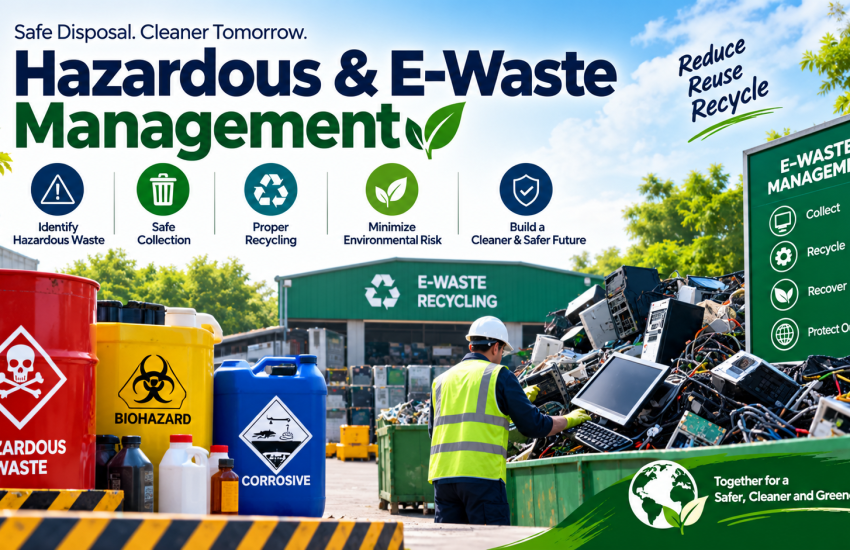
Hazardous & E-Waste Management: Protecting People and
The rapid growth of industries, businesses, technology, and consumer electronics has significantly increased the amount of waste generated worldwide. Among the different types of waste, hazardous waste and electronic waste (e-waste) require particular attention because they can contain substances and components that may pose risks to human health and the environment when they are improperly handled.
Effective hazardous and e-waste management provides a structured approach to identifying, collecting, storing, transporting, treating, recycling, and safely disposing of these materials.
What is Hazardous Waste?
Hazardous waste is waste that may present significant risks to human health or the environment because of its physical, chemical, or other hazardous properties.
It can be generated by industries, laboratories, healthcare facilities, workshops, construction activities, manufacturing processes, and other commercial operations.
Examples may include:
* Chemical waste
* Used oils and solvents
* Contaminated containers
* Certain industrial residues
* Laboratory chemicals
* Batteries
* Contaminated materials
* Certain paints and chemical products
The characteristics of hazardous waste can vary considerably, so appropriate identification and classification are important before handling or disposal.
What is E-Waste?
Electronic waste, commonly known as e-waste, refers to discarded electrical and electronic equipment and their components.
As technology develops rapidly, computers, mobile phones, televisions, printers, appliances, networking equipment, and other electronic products are frequently replaced.
Common examples of e-waste include:
* Computers and laptops
* Mobile phones and tablets
* Televisions
* Printers and scanners
* Computer accessories
* Networking equipment
* Electrical appliances
* Circuit boards
* Cables and electronic components
* Batteries
Some electronic products contain valuable recoverable materials, while others may contain substances that require controlled handling.
Why is Proper E-Waste Management Important?
Improper disposal of electronic equipment can result in environmental pollution and the loss of valuable recyclable materials.
When electronic waste is dumped, burned, dismantled, or processed using unsafe methods, harmful substances may be released into the surrounding environment.
Proper e-waste management can help:
* Reduce environmental pollution
* Recover valuable materials
* Reduce pressure on natural resources
* Promote responsible recycling
* Minimize waste sent to landfills
* Improve workplace safety
* Support a circular economy
* Encourage responsible consumption
The Hazardous Waste Management Process
Effective hazardous waste management begins with identifying the type and characteristics of the waste.
#1. Waste Identification and Classification
The first step is determining what type of waste has been generated and whether it has hazardous characteristics.
Proper classification helps determine appropriate storage, transportation, treatment, and disposal requirements.
2. Segregation
Different waste streams should be separated where required.
Hazardous materials should not be mixed with ordinary municipal waste or incompatible materials. Proper segregation can reduce risks and make subsequent treatment and disposal more effective.
3. Safe Storage
Hazardous waste should be stored in appropriate containers and designated areas.
Storage arrangements should consider factors such as container compatibility, labeling, access control, spill prevention, ventilation, and emergency response requirements.
4. Transportation
Hazardous materials may require controlled transportation using suitable containers, procedures, and documentation.
Safe transportation helps minimize the possibility of spills, exposure, accidents, and environmental contamination.
5. Treatment and Recovery
Depending on the waste type, treatment may be used to reduce hazards or recover useful materials.
Where technically and environmentally appropriate, recycling and resource recovery can reduce the amount of waste requiring final disposal.
6. Final Disposal
Waste that cannot be safely reused, recovered, or recycled may require controlled final disposal using appropriate facilities and approved methods.
The objective is to prevent contamination of soil, water, and surrounding ecosystems.
E-Waste Recycling and Resource Recovery
E-waste contains materials that can potentially be recovered and reused. Metals and other components may be separated through appropriate recycling processes.
Responsible recycling can help reduce the demand for newly extracted raw materials and support more efficient use of resources.
However, electronic equipment should be processed through appropriate recycling systems rather than informal or unsafe dismantling practices.
Importance of Data Security in E-Waste
Electronic devices can contain sensitive information even after they are no longer in use.
Before computers, smartphones, storage devices, servers, or other electronic equipment are recycled or disposed of, organizations should consider appropriate data-security procedures.
Secure data destruction or verified data erasure can help prevent unauthorized access to confidential information.
This is particularly important for businesses, educational institutions, healthcare organizations, government offices, and other organizations handling sensitive data.
Workplace Health and Safety
Hazardous and e-waste management should also focus on worker safety.
Personnel involved in collection, handling, transportation, dismantling, recycling, or treatment should receive appropriate training and follow established safety procedures.
Depending on the nature of the waste, appropriate personal protective equipment and emergency procedures may be required.
Environmental Risks of Improper Waste Disposal
Poor waste management practices can contribute to several environmental problems.
Potential impacts include:
* Soil contamination
* Water pollution
* Air pollution
* Uncontrolled emissions
* Damage to ecosystems
* Exposure risks for workers and communities
* Loss of recyclable materials
* Increased pressure on landfill capacity
These risks demonstrate why waste should be managed systematically from the point of generation through final treatment or disposal.
Developing an Effective Waste Management Strategy
Organizations can improve their waste management performance by developing a structured waste management strategy.
A practical strategy may include:
1. Identifying waste sources
2. Classifying waste types
3. Establishing segregation procedures
4. Providing suitable storage facilities
5. Training employees
6. Maintaining waste records
7. Working with qualified waste-management providers
8. Increasing recycling and recovery
9. Monitoring environmental performance
10. Reviewing and improving procedures regularly
Benefits for Organizations
A well-designed hazardous and e-waste management program can provide environmental, operational, and organizational benefits.
These may include:
* Reduced environmental risks
* Improved workplace safety
* Better resource efficiency
* Increased recycling opportunities
* Improved regulatory compliance
* Better waste tracking
* Reduced disposal volumes
* Enhanced sustainability performance
Organizations can also demonstrate greater environmental responsibility by maintaining transparent waste-management practices.
Moving Toward a Circular Economy
Traditional waste management often focuses on disposal. A circular economy approach instead emphasizes reducing waste, extending product lifecycles, repairing equipment, reusing materials, and recovering valuable resources.
For electronic products, organizations can consider whether equipment can be repaired, upgraded, reused, refurbished, or responsibly recycled before selecting final disposal.
This approach can help reduce unnecessary waste while making better use of available resources.
Our Hazardous & E-Waste Management Services
Professional waste-management services can support organizations in developing practical systems for hazardous and electronic waste.
Services may include:
* Waste assessment and identification
* Waste segregation planning
* E-waste management
* Hazardous waste handling guidance
* Storage and transportation planning
* Recycling and resource recovery solutions
* Environmental monitoring
* Waste documentation and record management
* Staff training and awareness
* Environmental compliance support
Solutions can be designed according to the nature, scale, and environmental requirements of each organization.
Conclusion
Hazardous and electronic waste management is an important part of modern environmental management. As industries and technology continue to grow, organizations need responsible systems for managing the waste they generate.
From proper identification and segregation to recycling, resource recovery, and safe final disposal, every stage plays a role in reducing environmental risks.
By adopting responsible hazardous and e-waste management practices, organizations can protect the environment, improve workplace safety, conserve valuable resources, and contribute to a more sustainable and circular economy.
