
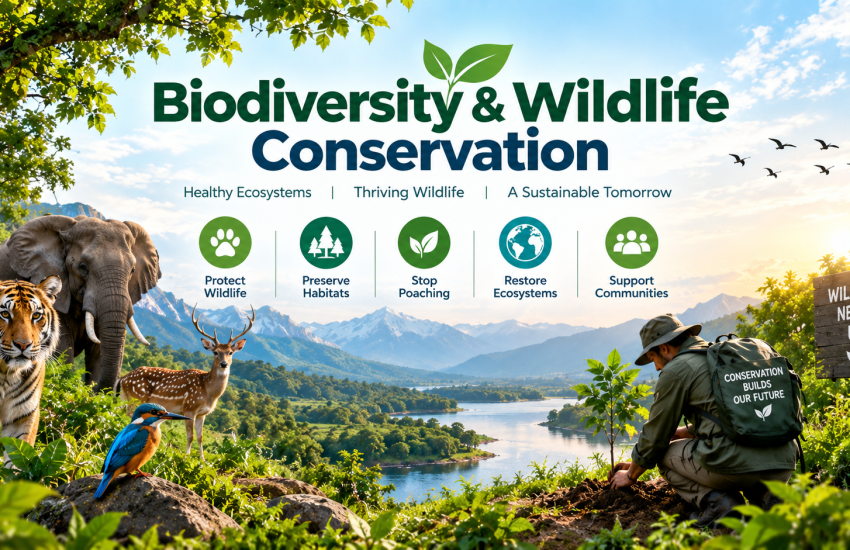
Biodiversity & Wildlife Conservation: Protecting Nature for
Biodiversity is the foundation of healthy ecosystems and a sustainable environment. It includes the variety of plants, animals, microorganisms, and ecosystems found across the planet. From forests and wetlands to rivers, grasslands, mountains, and coastal environments, every ecosystem supports a complex network of life.
Wildlife conservation focuses on protecting animal and plant species, their habitats, and the ecological systems on which they depend. As human activities continue to transform natural environments, effective biodiversity conservation has become increasingly important.
What is Biodiversity?
Biodiversity refers to the variety of living organisms and ecosystems in a particular area or across the planet. It can be considered at different levels, including genetic diversity, species diversity, and ecosystem diversity.
A healthy ecosystem depends on interactions between different organisms. Plants, insects, birds, mammals, microorganisms, and other organisms contribute to processes such as pollination, nutrient cycling, soil formation, and natural pest control.
Why is Biodiversity Important?
Biodiversity provides ecological, economic, and social benefits. Healthy ecosystems support clean water, fertile soils, food production, climate regulation, and many other essential services.
Biodiversity conservation can help:
* Maintain healthy ecosystems
* Protect endangered and threatened species
* Preserve natural habitats
* Support food and water security
* Protect ecological processes
* Maintain genetic resources
* Support sustainable livelihoods
* Strengthen ecosystem resilience
Major Threats to Biodiversity
Wildlife and ecosystems face multiple pressures. The severity and nature of these pressures vary between regions and ecosystems.
Common threats include:
Habitat Loss
Conversion of forests, wetlands, grasslands, and other natural habitats for agriculture, infrastructure, urban development, and other land uses can reduce available habitat for wildlife.
Habitat fragmentation can also divide previously connected ecosystems into smaller areas, making it more difficult for species to move, reproduce, and access food and water.
Pollution
Air, water, and soil pollution can negatively affect organisms and ecosystems. Industrial discharge, agricultural runoff, plastic waste, and other pollutants can alter environmental conditions and create risks for wildlife.
Climate Change
Changes in temperature, rainfall, sea levels, and the frequency or intensity of extreme weather events can affect habitats and species.
Some species may adapt or move to new areas, while others may face increasing pressure when suitable habitat becomes limited.
Unsustainable Resource Use
Overexploitation of forests, fisheries, wildlife, and other natural resources can reduce populations and affect ecosystem balance.
Responsible resource management is therefore an important part of conservation.
Invasive Species
Non-native species can sometimes spread rapidly and compete with native organisms for food, habitat, or other resources. In certain ecosystems, invasive species can alter ecological processes and reduce native biodiversity.
Wildlife Conservation Approaches
Wildlife conservation involves a combination of strategies depending on the species, ecosystem, and conservation objectives.
Protected Areas
National parks, wildlife reserves, forests, wetlands, and other protected areas can provide important habitats for wildlife.
Effective management of protected areas can help conserve species while maintaining important ecosystem functions.
Habitat Restoration
Damaged ecosystems can sometimes be restored through activities such as reforestation, wetland restoration, native vegetation planting, erosion control, and rehabilitation of degraded landscapes.
Restoration aims to improve habitat quality and ecological function.
Species Conservation
Some species require targeted conservation measures because of declining populations or restricted habitats.
Species conservation programs may include population monitoring, habitat protection, breeding programs where appropriate, disease management, and efforts to reduce specific threats.
Biodiversity Surveys and Environmental Assessments
Before major development projects are implemented, biodiversity surveys can help identify important habitats, species, ecological features, and potential environmental risks.
Field surveys may document:
* Mammals
* Birds
* Reptiles
* Amphibians
* Fish
* Insects
* Plants
* Vegetation communities
* Sensitive habitats
* Ecologically important areas
This information can support environmental planning and help identify appropriate mitigation measures.
Biodiversity Monitoring
Conservation requires ongoing monitoring because ecosystems and wildlife populations can change over time.
Monitoring programs may involve field observations, camera traps, vegetation surveys, species inventories, geographic information systems, remote sensing, and other appropriate technologies.
Regular monitoring can help organizations understand trends and evaluate whether conservation measures are achieving their intended objectives.
Role of GIS and Remote Sensing
Modern conservation increasingly uses digital technologies to understand and monitor ecosystems.
Geographic Information Systems (GIS) can be used to map habitats, protected areas, wildlife corridors, land-use patterns, and environmental changes.
Remote sensing can provide information about vegetation cover, land-use changes, water bodies, forest conditions, and other landscape characteristics over large areas.
Combining field observations with GIS and remote sensing can improve environmental planning and conservation decision-making.
Wildlife Corridors and Habitat Connectivity
Wildlife corridors are areas that help connect fragmented habitats. They can provide routes through which animals move between feeding areas, breeding grounds, and other important habitats.
Maintaining habitat connectivity can be particularly important where roads, cities, agriculture, or other developments have divided natural landscapes.
Environmental planning can consider wildlife movement when designing infrastructure and land-use projects.
Community Participation in Conservation
Local communities can play an important role in biodiversity conservation. People living near forests, wetlands, protected areas, and other ecosystems often have valuable knowledge about local environmental conditions and wildlife.
Community-based conservation can involve:
* Environmental education
* Sustainable resource use
* Local conservation programs
* Wildlife awareness
* Sustainable livelihood opportunities
* Habitat restoration activities
* Community monitoring
Long-term conservation can benefit from meaningful participation by relevant local stakeholders.
Sustainable Development and Biodiversity
Economic development and environmental conservation are closely connected. Infrastructure, agriculture, tourism, energy, and other sectors depend on natural resources and functioning ecosystems.
Sustainable development seeks to consider environmental impacts while meeting social and economic needs.
Environmental assessments, biodiversity planning, habitat protection, and mitigation measures can help reduce unnecessary ecological impacts associated with development activities.
The Role of Environmental Consultants
Environmental consultants can assist organizations, developers, institutions, and other stakeholders with biodiversity and wildlife conservation planning.
Professional services may include:
* Biodiversity surveys
* Wildlife assessments
* Habitat assessments
* Ecological baseline studies
* Environmental impact assessments
* Biodiversity management plans
* Habitat restoration planning
* GIS-based ecological mapping
* Wildlife monitoring
* Conservation strategy development
* Environmental awareness and training
These services can help integrate biodiversity considerations into project planning and environmental management.
Building a Sustainable Future
Biodiversity conservation is not limited to protected areas or wildlife organizations. Businesses, communities, governments, researchers, and individuals can all contribute to protecting ecosystems.
Practical actions such as protecting natural habitats, reducing pollution, using resources responsibly, restoring degraded areas, and supporting conservation initiatives can contribute to long-term environmental sustainability.
Conclusion
Biodiversity and wildlife conservation are essential for maintaining healthy ecosystems and supporting human well-being. Natural habitats provide valuable ecological services, while diverse species contribute to the stability and resilience of ecosystems.
Protecting biodiversity requires a combination of scientific assessment, habitat conservation, sustainable resource management, environmental planning, community participation, and long-term monitoring.
By integrating biodiversity considerations into development and environmental management, organizations can help protect natural ecosystems while supporting a more sustainable future for both people and wildlife.
